Oral Antidiabetic Drugs During Ramadhan
As compared to oral hypoglycemic agents OHAs and sulfonylureas SUs which carry a higher and significant risk of hypoglycemia newer antidiabetic agents such as dipeptidyl peptidase-4 DPP-4 inhibitors have demonstrated lower risk of hypoglycemia during Ramadan fasting with better patient compliance. Fasting and after T3.

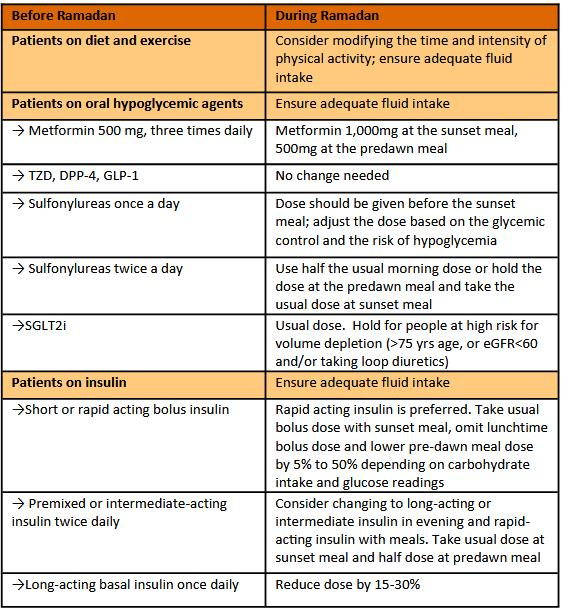
Insulin During Ramadan Cpg T2dm 5th Ed Ramadan Insulin Iftar
The aim of this study was to assess the safety of a protocol involving dose adjustments to four different anti-diabetic.

. Majority of diabetics had poorly controlled Fasting Blood Sugar FBS and Body Mass Index BMI. Older long acting sulfonylureas like glibenclamide and chlorpropamide should be avoided during fasting. With the advent of newer anti-diabetic agents there is a good scope for better control and reduced complications.
There was little or no change in the lifestyle activities and InsulinOral AntiDiabetic Drug OAD doses during Ramadan. Patients who are continuing antidiabetic medications and undergoing fasting during Ramadan may encounter several difficulties such as hypoglycemia and other health-related complications. MANAGEMENT DURING RAMADAN A guideline is intended to assist healthcare professionals in the choice of disease-specific treatments.
Type I diabetes is a condition where the body does not produce any insulin. With the advent of newer anti-diabetic agents there is a good scope for better control and reduced complications. These medications may be used as single therapy or in addition with metformin sulfonylurea or TZD.
Clinicians should be mindful of the potential for harmful polypharmacy and. Safely or have their dosages adjusted during Ramadan. Glimepiride repaglinide and insulin glargine and included 49 type 2 diabetes mellitus T2DM patients and 16 controls.
Newer generation sulfonylureas gliclazide MR and glimepiride have reasonable safety profile during Ramadan fasting and are economical options for a large number of diabetics worldwide especially in the developing countries. Clinical judgement should be exercised on the applicability of any guideline influenced by individual patient characteristics. SGLT-2 inhibitors canagliflozin dapagliflozin empagliflozin sulfonylureas chlorpropamide glimepiride glipizide glyburide tolazamide tolbutamide and thiazolidinediones rosiglitazone pioglitazone.
In summary liraglutide usage during Ramadan for patients with type 2 DM may be reasonable because it is associated with better glycemic control improved body weight and less hypoglycemic episodes when compared with SU. There was a significant weight loss during Ramadan p. The objective of this review is to provide a comprehensive overview of the currently available evidence and potential role of DPP-4 inhibitors in the management of patients with T2DM fasting during Ramadan whose diabetes is treated with oral antidiabetic drugs and to discuss the mechanistic basis for their beneficial effects in this setting.
75 for sulfonylureas 75 for glargine 75 for premixed insulin 7030 in two doses and 75 for regular insulin. CURRENT ISSUES PAGE 6-7 Accepted abbreviations for prescription writing in HKKB. Many people with diabetes can safely keep fast during Ramadan after discussion with their doctor.
There was little or no change in the lifestyle activities and InsulinOral AntiDiabetic Drug OAD doses during Ramadan. There was a significant weight loss during Ramadan p. Hypoglycemia occurred at a lower rate than pre-Ramadan values in groups C and D.
The same oral antidiabetic agents that were used prior to the fast are used during Ramadan with modification in dosage and timing. To the best of the authors knowledge the only study to compare more than two drugs during Ramadan included three drugs. Oral Anti-diabetic agents OAD Metformin.
However some modern SUs GLIC GLIM and GLIP are associated with lower risk of. Due to the increased risk of hypoglycemia individuals with SUs should be careful during fasting period. The overall mean weight change was -049 154 SD.
Some are available in combination. The benefits of meeting optimal blood glucose goals in diabetic patients are now well understood due to data from many clinical trials See Table 1Currently a variety of oral medications such as sulfonylureas biguanides thiazolidinediones meglitinides and alpha-glucosidase inhibitors are available to treat type 2. Authors of another study have contended that the second-generation basal insulin analogue glargine may be safely used in Ramadan Fasting in combination with other oral antidiabetic medications.
The overall mean weight change was -049 154 SD. The study was carried out over three periods - before T1. During Ramadan drug doses were adjusted as percentages of their pre-Ramadan values.
RAMADHAN IS HERE AGAIN. This treatment is similar to the other oral antidiabetic drugs. Ad Learn About Treatment Proven to Help Lower A1C over 30 weeks.
It should be noted moreover that in addition to long-acting basal insulin injection of rapid or short-acting insulins may be necessary for proper management of. During Ramadan the ninth month of the Islamic lunar calendar adult Muslims are required to refrain from taking any food beverages or oral drugs as well as from sexual intercourse between dawn and sunset. Nevertheless a few newer agents may have less potential for hypoglycaemia and be beneficial to patients during Ramadan.
Rhythms of life and. Majority of diabetics had poorly controlled Fasting Blood Sugar FBS and Body Mass Index BMI. The same oral antidiabetic agents that were used prior to the fast are used during Ramadan with modification in dosage and timing.
No cases of DKA or NKHS were reported. Metformin was adjusted to a twice-daily regimen. Return to Pharmacotherapy Update Index.
ISSUE OF THE MONTH. We present here a summary of studies to date on the available oral and injectable medications for patients with T2D. Ramadan can occur in any of the four seasons and the hours spent fasting vary accordingly from 11 hours to 18 hours a day.
Postfasting Ramadan - in three towns located in the northwestern region of Algeria. PAGE 1-5 Self monitoring blood glucose during fasting Dosage adjustment for Oral Antidiabetic and insulin during fasting Updated list of medication that cannot be taken by muslim during fasting. Dipeptidyl peptidase 4 inhibitors include sitagliptin saxagliptin vidagliptin linagliptin and alogliptin.
However it should be used with caution because of its GIT side effects which may negatively affect a fasting patient since GIT problems may. A total of 276 outpatient women receiving oral antidiabetic drugs OADs BMI 3463 - 329 kgm2 aged 49 -6 years were selected. Oral DPP-IV inhibitors are important.
Managing Your Diabetes During Ramadan Muslims Who Fast During Ramadan Must Abstain From Eating Drinking Taking Oral Medications And Smoking However There Are No Restrictions On Food Or Fluid Intake Between Sunset And Dawn Most People

Oads During Ramadan Cpg T2dm 5th Ed Metformin Ramadan Diabetes
Changes Made To The Anti Diabetic Medication Regimens During Ramadan Download Table


Comments
Post a Comment